
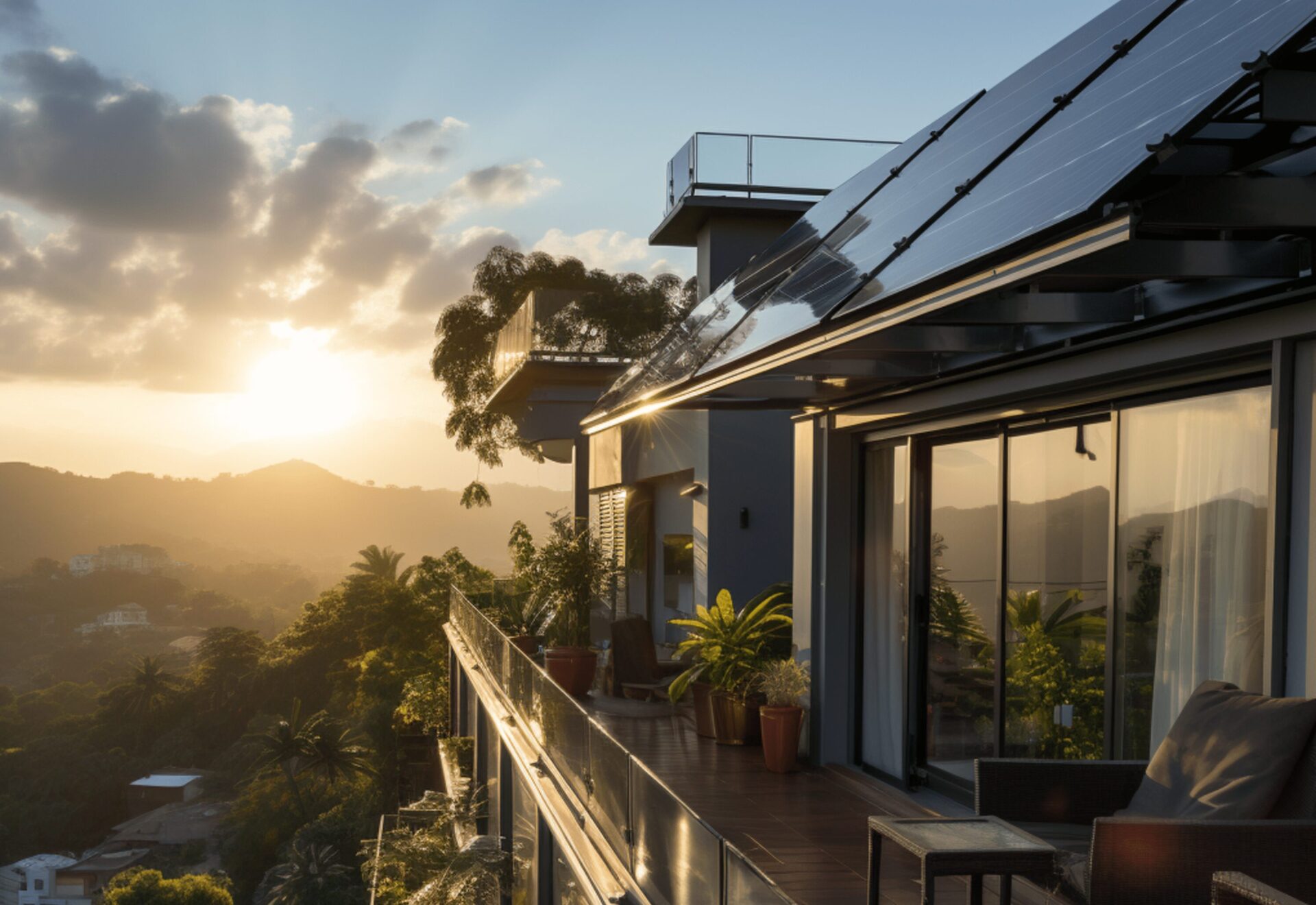
Three years ago, an apartment association (KÜ) located in the town of Võru, Estonia, installed a battery storage system alongside their solar panels, equipped with MarkeDroid’s smart energy management system. Since then, the association has significantly cut down on its electricity bills.
Back in 2017, when KredEx (now EIS) was providing support for the renovation of apartment buildings and the installation of solar panels, the members of the apartment association on Luha Street in Võru decided to make use of the grant.
Ilmar Lepik, a board member of the 30-apartment association, mentioned that the solar panels installed roughly a decade ago have a lower capacity than the solutions available today; however, at the time, using solar panels was quite a novel concept. The association uses solar energy to cover common electricity costs, while individual apartments have separate grid connections and meters.
“Our goal with adopting solar energy was to keep daily maintenance costs ‘affordable.’ Our consumption data and the MarkeDroid app show that our total annual electricity consumption revolves around 12,000 kWh,” Lepik added.
While initially the association only had solar panels—using the self-produced electricity to power the building’s lighting, ventilation, and heating substation without any protection against grid outages—they decided to install a battery solution three years ago. Initially, after the batteries were installed, the association had to manually set the operating modes for the batteries and inverter, which quickly became tedious.
According to Lepik, life became much easier with the addition of the MarkeDroid solution. “MarkeDroid handles all the work for us regarding what hours we sell from the batteries, charge them, or use the electricity ourselves. The software factors in the spot price, our consumption, and does all the necessary math,” Lepik explained.
Previously, without batteries, the association could only utilize 1/4 of its produced solar energy. Now, they consume half of their self-produced energy for their own needs. “We consume it instantly, sell it, store our produced electricity in the battery, sell the surplus from the batteries back to the grid, and also buy extra from the grid when the sun isn’t shining and the spot price is cheap. That way, we can use it ourselves when prices are high.”
Lepik noted that people naturally wonder how the software calculates it all. “I haven’t seen the structure of the MarkeDroid formula; it’s probably a long and complex calculation if you were to print it out on paper. But I’ve kept an eye on the results, and safe to say, we have never been allowed to sell electricity at a negative price,” he confirmed.
According to Lepik, one surprising aspect when commissioning the batteries was that 10% of the battery capacity must always remain in reserve. “I spoke with the installer, and they, along with the battery manufacturer, confirmed that this requirement is related to battery lifespan. It’s a manufacturer requirement because fully draining a battery is apparently not good for it.”
Looking at the association’s electricity production, storage, and consumption, Lepik believes it would now be practical to increase the battery storage capacity to ensure more self-produced electricity is consumed on-site. Unfortunately, due to technical constraints, expanding the capacity of a battery system that is already operational is not feasible. A more cost-effective option is to add an additional battery module along with an inverter.
“The goal remains to get the batteries charged from the panels during the day and use that power at night, selling whatever is left over to the grid. That’s just how it is—during the short summer, we often have surplus electricity from the solar panels, but in the winter, there is always a shortage,” Lepik said, sharing their future plans.
Matthias Paluteder, Account Manager at MarkeDroid
Let’s look at the apartment association’s electricity bills for the period between May 25, 2025, and May 25, 2026:
Total actual common electricity bill last year: approximately €981
Estimated bill without MarkeDroid’s smart management: approximately €2,333
Annual savings from using the MarkeDroid platform: €1,352
Had the association joined the flexibility market (flex market), they could have earned an additional €2,000 or so per year. In the case of this specific association, their electricity bill would have actually been in the plus (we compared the association’s battery capacities and setup with an equivalent property).
In conclusion: If an apartment association has already installed solar panels and/or batteries, smart management can schedule when to sell the batteries to the grid, when to store energy from the grid in addition to the panels, and when to cover the building’s electricity needs. Furthermore, participating in the flexibility market offers potential additional revenue.
