


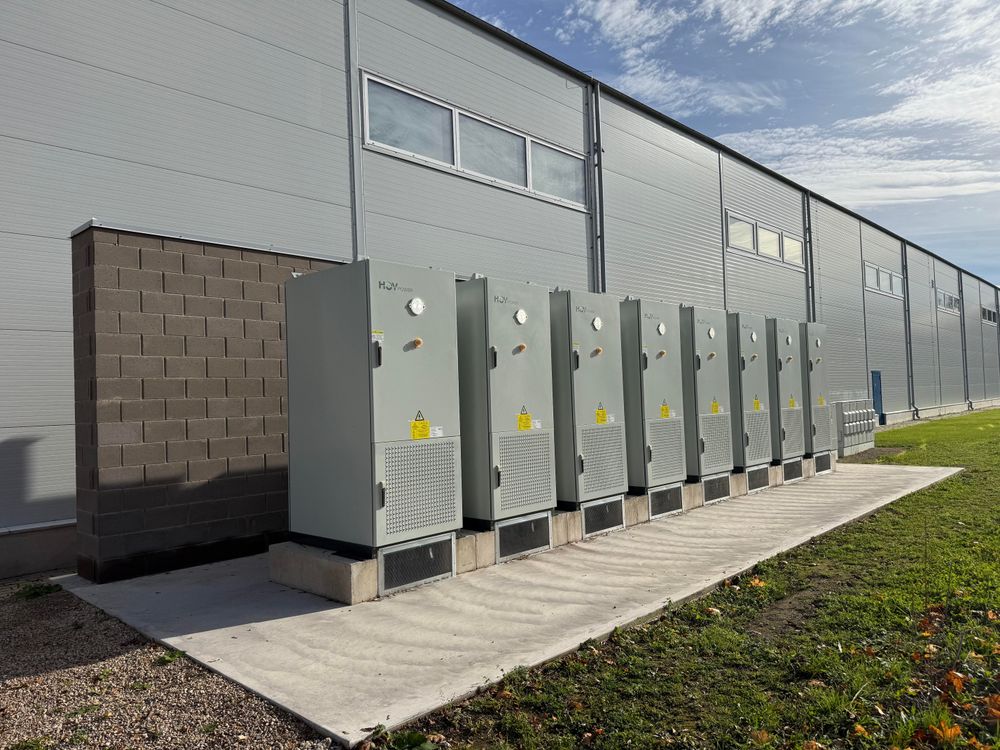
Räpina Paper Mill's investments in solar energy began in 2022, when the electricity market changed dramatically and electricity prices were very high. According to CEO Kaur Palm, renewable energy is an important topic, but competitiveness is also a major concern – the European edge protector manufacturing market is marked by fierce price competition.
Palm says that before the energy crisis, they were rather sceptical about solar energy.
“Many companies were cautious about solar before the energy crisis, and so were we. But when electricity prices increased several times over, we installed as many panels as we could at the time,” Palm recalls.
The first solar park, with a capacity of 300 kW, was installed on the company's roof in 2022–2023. A second 200 kW phase has since been completed, and a third 160 kW phase is expected to be finished on the roof in autumn 2026. The mill's consumption reaches 750 kWh at peak times, and production runs 24/7.
“Of our 750 kWh of consumption, we get about 200 kW from the 300 kW solar park in summer. November, December, January, and part of February and March are relatively poor in terms of sunshine. But depending on the weather, the sun actually starts coming through by then,” the CEO explains.
Battery first, then panels
If the mill were to start down the same path again today, Palm would invest in a different order – his advice is: start with the battery.
“If we're talking about the return on batteries versus solar panels today, I would recommend installing batteries first. There's no point at all anymore in installing solar alone without a battery – when the sun is shining, electricity is generally cheap anyway,” says Palm.
That is exactly why the mill purchased batteries last autumn and expanded the battery system further in May this year. “Now we can charge the batteries from the grid when electricity is cheap and use it when the price is high,” Palm describes the logic.
Four months of experience with the new battery system is not yet enough to speak about a full year, but according to the CEO, the first results are clear. According to the company's calculations, the payback period of the battery system is 4.5 years.
“As things stand today, depending on the month, we can cut a quarter to a third off the electricity price we need to pay,” says Palm.
Although with a solar park and batteries the plant would occasionally have surplus electricity to sell to the grid and earn additional income, grid constraints effectively prevent the paper mill from doing so.
“We can buy 1,200 kW per hour, but we can sell very little. In other words, our ‘outgoing pipe’ is narrow. This means we essentially cannot participate in the frequency market, even though we would like to,” Palm explains.
Competition drives investment
As the growing volumes of panels, batteries, self-consumption and grid purchases required automation, the paper mill began using MarkeDroid's smart electricity management software.
“I'm optimistic about the future – today we still manage the company's budget in Excel: if a new solution brings savings, we use it. Our company has a short decision-making chain, and we can make changes quickly.”
Roughly 15–18 percent of Räpina Paper Mill's output stays in Estonia, while the rest is exported – most of it to Europe and some to the USA.
“But the Estonian market is small. Our customers are edge protector manufacturers in Scandinavia and Europe. At the same time, we have many competitors in Europe and the price pressure is very high. That's exactly why we make these investments – so that we can stay competitive on price,” the CEO explains.
Not only households, but large companies too
According to Toomas Kärner, founder and CEO of MarkeDroid, Räpina Paper Mill was a very interesting and responsive company to work with.
“Räpina Paper Mill started using our energy management platform once they had the first phase of batteries installed. The paper mill is an interesting client in the sense that they have very high self-consumption, meaning almost all of the electricity produced or stored is used in the factory for production,” Kärner added.
In Kärner's view, what also made the project interesting for MarkeDroid was that the second-phase batteries came from a different manufacturer than the first-phase ones.
“Before the paper mill, we had not managed batteries from two different manufacturers, and although there was a lot of custom work on the software side, we succeeded in writing much of the battery control logic into our software's core code. To draw a parallel, managing batteries from two different manufacturers is like combining two different car brands. This can sometimes mean that certain manufacturer-specific features cannot be used. But the fact that we managed this challenge shows that MarkeDroid is technically capable of managing very diverse installations,” he added.
The cooperation between MarkeDroid and Räpina Paper Mill was smooth, and according to Kärner, work progressed at a good pace.
“Räpina Paper Mill does use quite large capacities for production. So the sooner everything necessary was up and running, the greater the mill's financial gain. Today I can confidently say that, alongside serving household consumers, MarkeDroid has grown into a strong provider of smart energy management for industrial and commercial clients as well.”